
The Cheena Vala – Chinese fishing nets
The Cheena Vala (Chinese fishing nets) in Fort Kochi have a fascinating history and are a
unique example of ancient fishing technology. The Chinese fishing nets have assumed an
iconic symbol of Fort Kochi and Kerala’s rich cultural heritage. These nets are featured
prominently in the local tourism industry, with many visitors coming to watch them in
action or photograph them against the scenic coastal backdrop.
The Chinese fishing nets are believed to have been introduced by Chinese traders during the
14th century. The fishermen in Kochi likely learned the technique from Chinese sailors who
arrived at the coast of Kerala to trade. The design of the fishing nets is thought to be
influenced by Chinese fishing technology, which was far ahead of its time in terms of
efficiency.
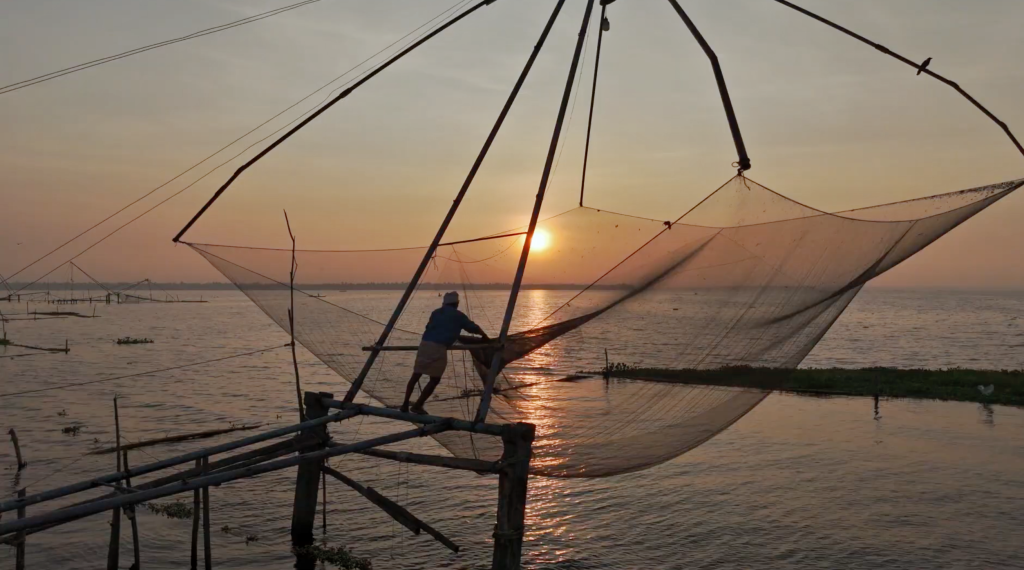
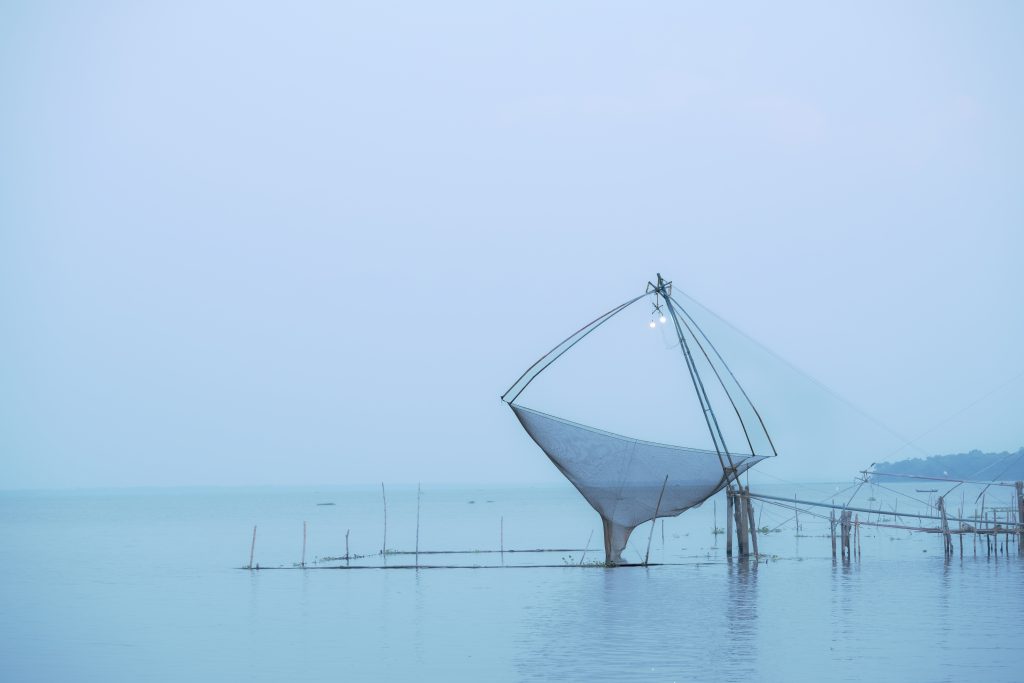
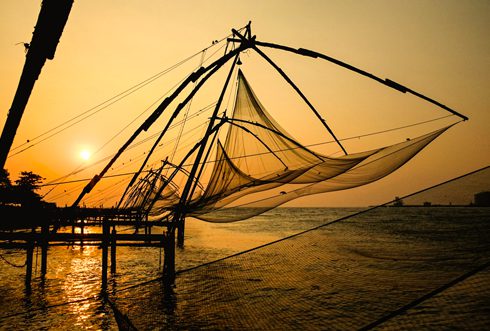
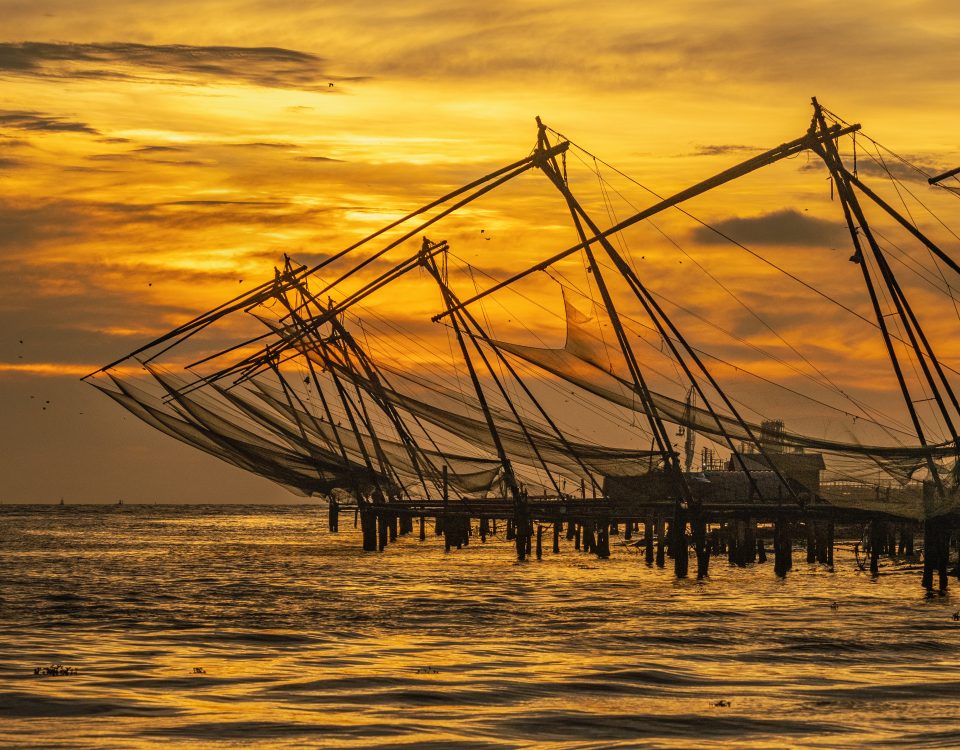
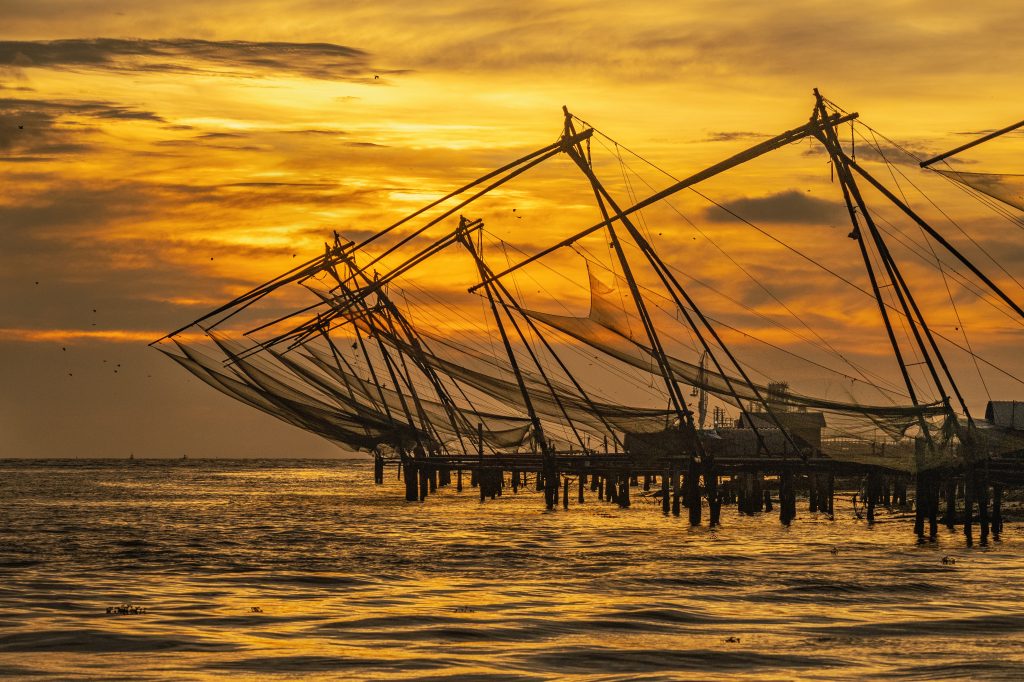
The Chinese fishing nets, a fascinating traditional method of fishing, are a unique and
captivating sight. These large, wooden structures are set up on the shore, usually around 10
metres high, and are designed to operate using a balance principle. The cantilever design,
with the net stretching out to about 20 metres, relies on counterweights—typically large stones tied to ropes of different lengths. These stones help manage the balance, making it
easier for the fishermen to operate the net.
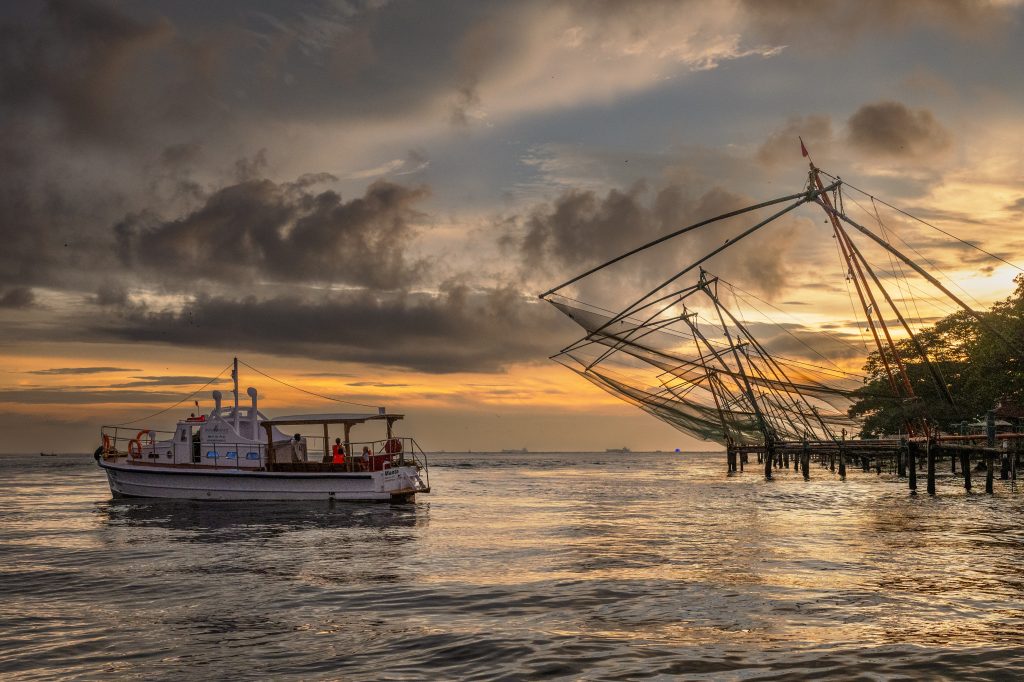
The addition of lights, often suspended above the nets, serves as a technique to attract fish,
creating a visually striking scene, especially in the evenings. The process of fishing involves a
team of more than four fishermen, working together in sync. One of the most interesting
aspects is that the weight of a fisherman walking along the plank is enough to trigger the net
to lower into the water.
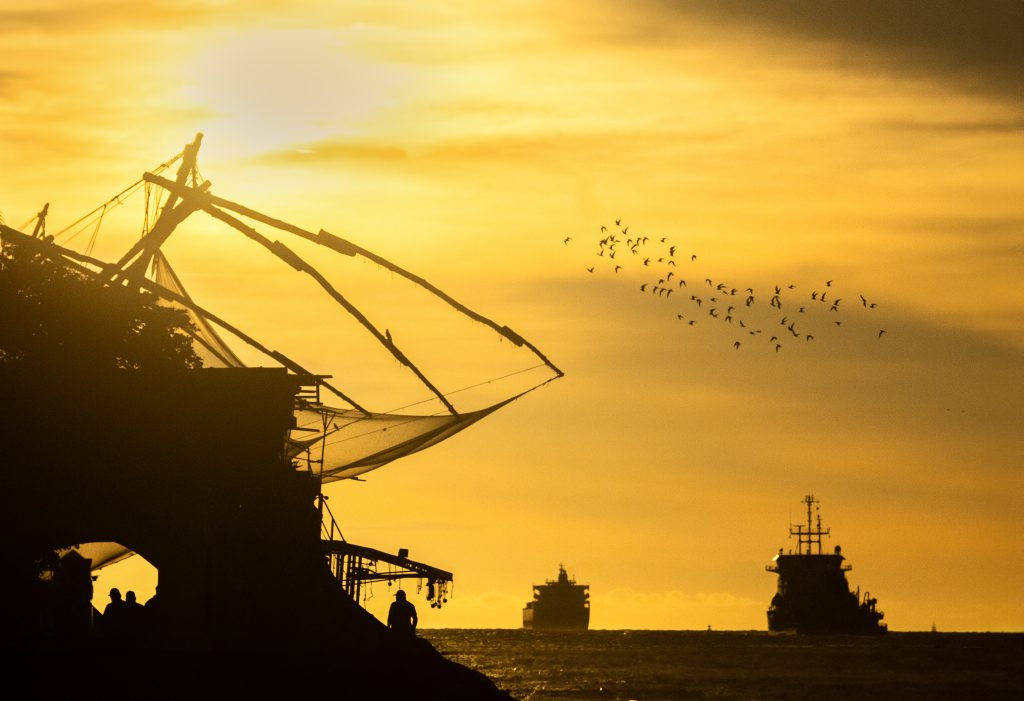
The fishing takes place in the early morning and evening hours, with the net being
submerged for a brief period before it is gently raised again. This slow, rhythmic action of
lowering and raising the net, guided by the balance of weights, offers a mesmerising
experience for anyone witnessing it for the first time. It is not just a method of fishing—it’s a
beautiful example of human ingenuity and harmony with nature.
Though the Chinese fishing nets are no longer the primary fishing method in Kochi, they are
still in use by a small community of fishermen. Modern boats and trawlers have largely
taken over commercial fishing due to their efficiency, but the nets continue to play a role in
the traditional lifestyle of the region. They are especially popular with tourists, who are able
to see these centuries-old techniques in action. Despite the decline in their commercial use,
the Chinese fishing nets remain a significant part of Kochi’s cultural landscape, with efforts
to preserve their tradition in the face of changing fishing methods.
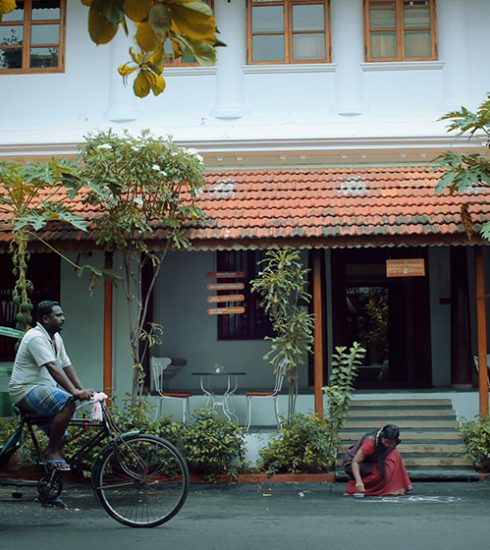
The area around the Brunton Boatyard is one of the most scenic and culturally rich parts of
Fort Kochi. The blend of colonial-era architecture, the Chinese fishing nets, and the
waterfront atmosphere creates a charming setting that feels like stepping back in time. So, if
you’re staying at Brunton Boatyard or simply visiting, you’re in the perfect spot to witness
the unique blend of history, culture, and traditional fishing methods; all in the vicinity
nearby.