

Golu Dolls: A Tradition Shaped by Generations
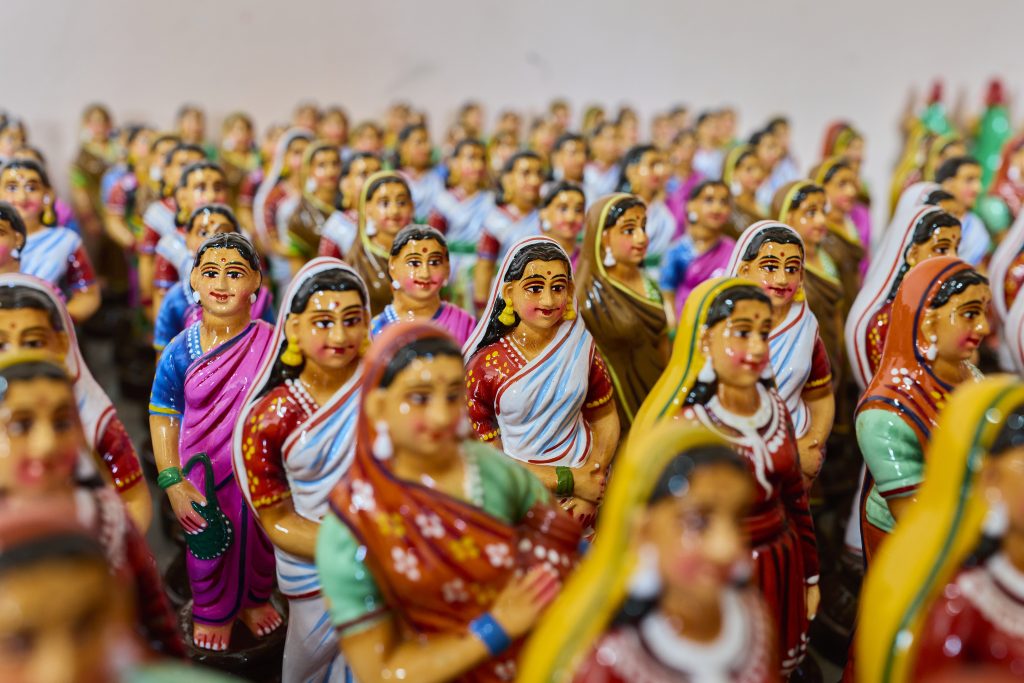
The tradition of Golu dolls during Navaratri is one of the most cherished cultural practices in South India. During the nine nights of the festival, households arrange stepped displays filled with carefully crafted figures of gods, goddesses, saints, animals, and scenes from everyday life. The display becomes both an act of devotion and a form of storytelling.
Behind many of these dolls are families who have been practising the craft for generations. Among them is a family that has been making Golu dolls for nearly 300 to 400 years, passing the knowledge from father to son. What continues today is not simply a small artisanal occupation but a tradition rooted deeply in faith, craftsmanship, and continuity.
For families who practise this art, doll making is not limited to a seasonal demand around Navaratri. It is a year long practice that requires patience, careful observation, and a deep understanding of traditional forms.
The Cultural Meaning of Golu
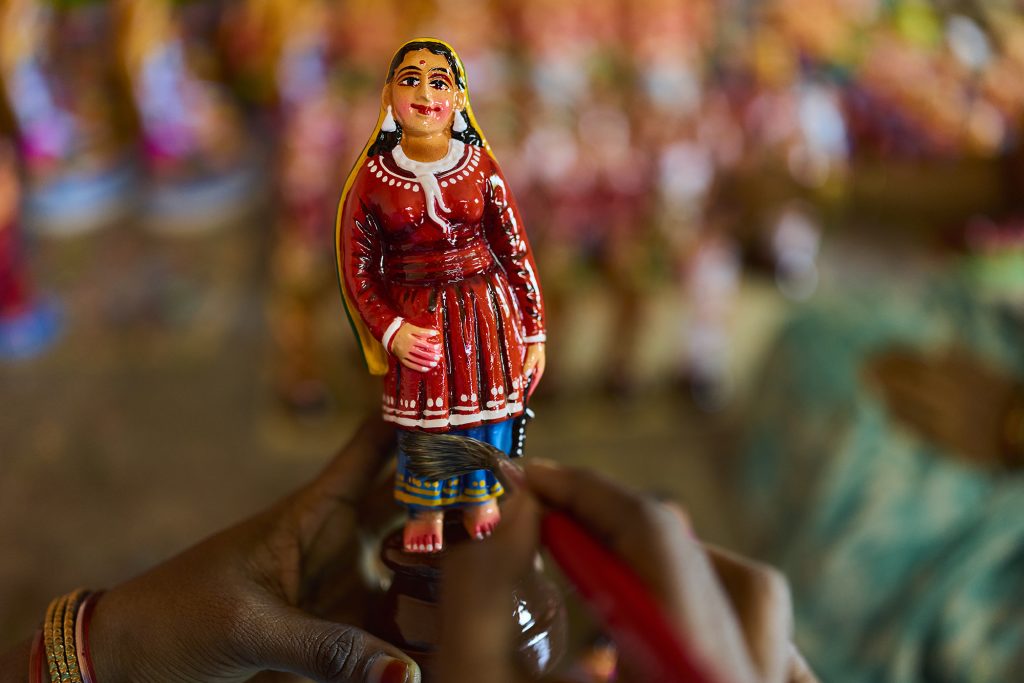
The Golu display is closely tied to the celebration of Navaratri, a festival dedicated to the worship of Goddess Lakshmi, Saraswati, and Durga. Each goddess is honoured for three days during the nine day festival, with prayers seeking prosperity, knowledge, and strength.
One of the central stories associated with Navaratri is the victory of Goddess Durga over the demon Mahishasura, symbolising the triumph of good over evil. However, the Golu arrangement expands far beyond this single narrative. The display often includes figures representing mythological episodes, temple traditions, saints, musicians, village life, and scenes from the epics.
The figures follow established visual traditions. The colour of Shiva, the posture of Rama, the iconography of Lakshmi or Saraswati all adhere to forms that have been preserved over centuries. In this way, Golu dolls act as small visual archives of cultural memory.
The origin of the practice also reflects an important social idea. Temple idols were historically made of precious metals and materials that were beyond the reach of ordinary households. Over time, people began creating their own representations so that the divine could be present in every home. The Golu display grew from this devotional impulse into a widely shared cultural practice.
A Craft Passed Through Generations
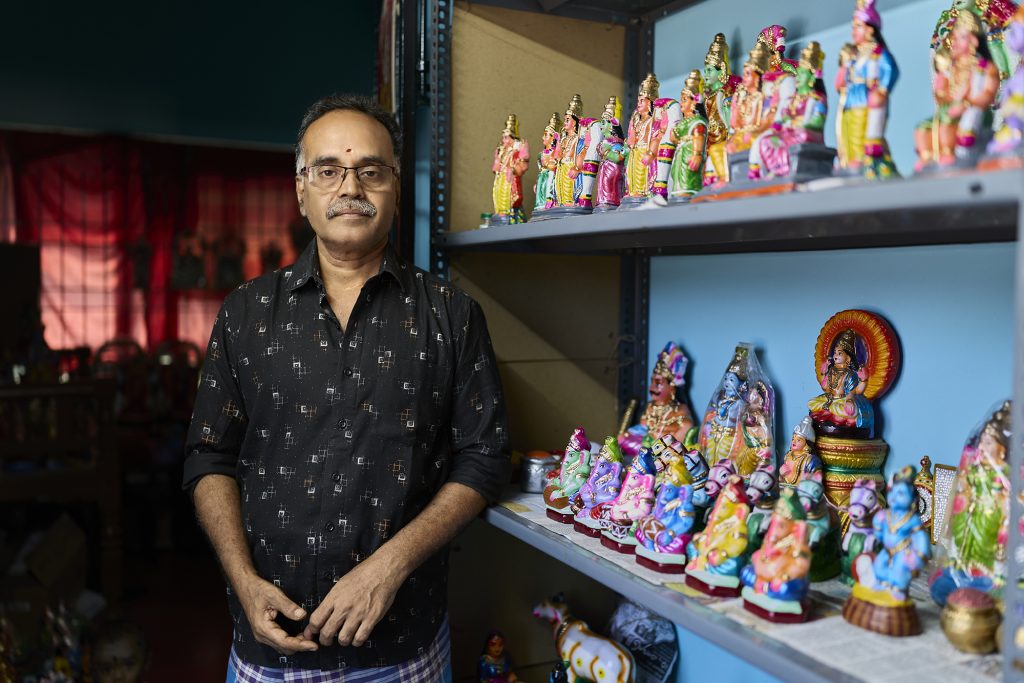
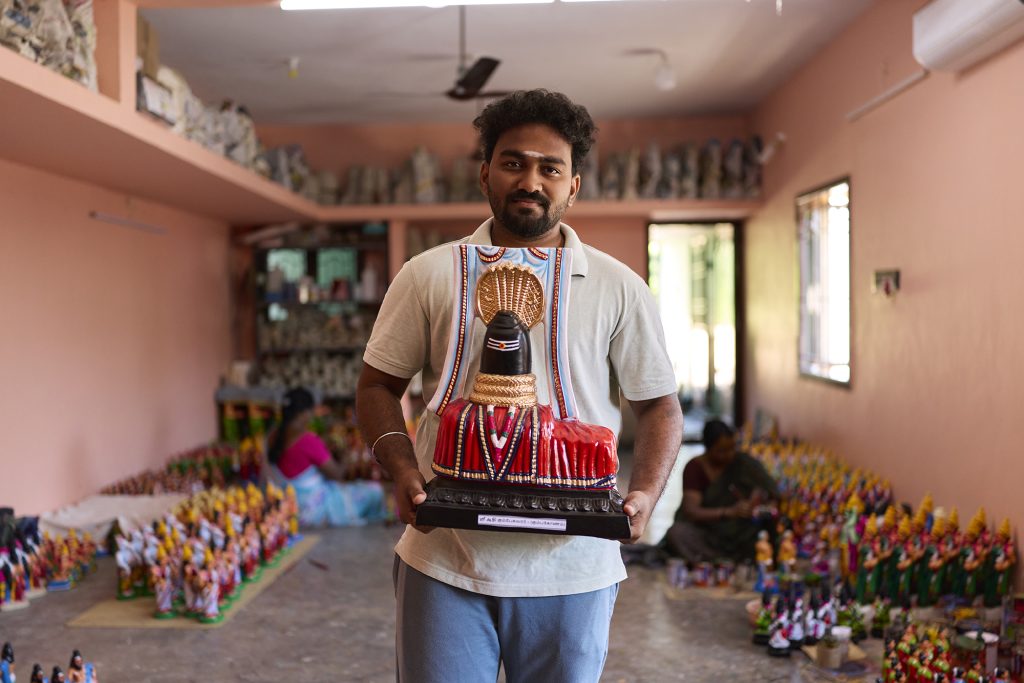
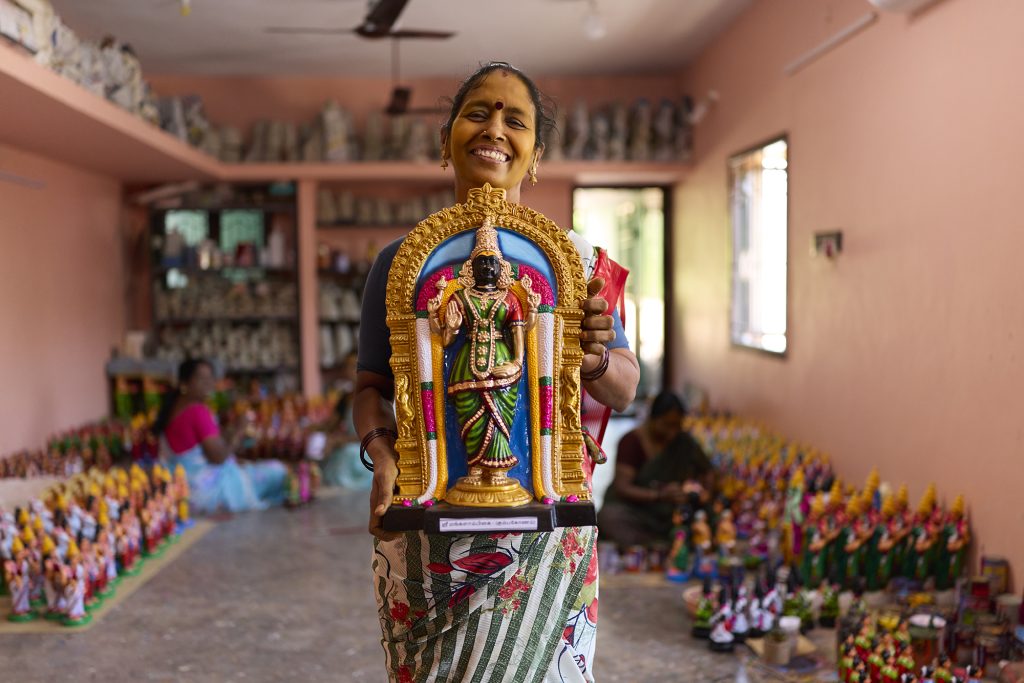
The knowledge of making Golu dolls is traditionally passed down within families. Learning happens through observation and participation rather than formal instruction. Younger members assist elders with preparing materials, moulding forms, and painting details until they gradually acquire the skill themselves.
Even today, the craft remains largely handmade. The shaping, joining, drying, and painting of each figure requires careful manual work. This approach preserves the individuality of each piece. No two dolls are exactly identical because each artisan brings subtle differences in proportion, expression, and colour.
The value of handmade work lies in these small variations, which carry the identity of the maker. Each piece reflects the patience and time invested in its creation.
Materials and Changing Practices
Traditionally, Golu dolls were made using locally sourced clay. The clay would be cleaned and prepared by hand to reach the correct consistency before being pressed into moulds. Once the forms were removed from the mould, the pieces were joined, dried thoroughly in the sun, and then painted.
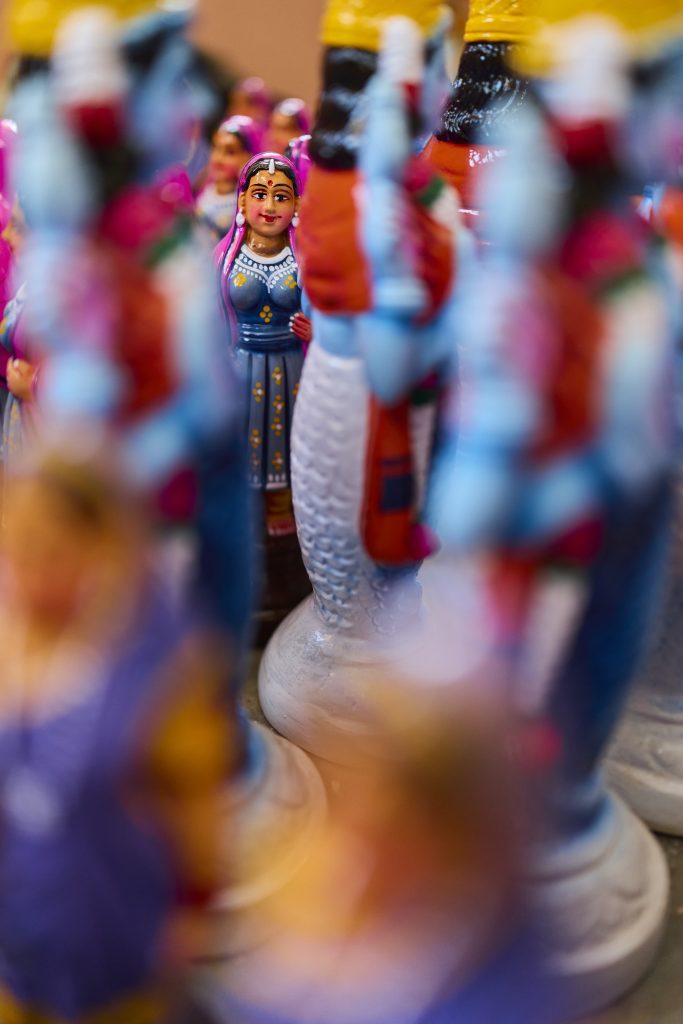
Clay dolls are durable but heavy. A single figure can weigh three to four kilograms. Earlier, they were commonly painted using watercolours, which were natural but often less durable over long periods.
As living spaces have changed, particularly with the rise of apartment living, many households have begun seeking lighter alternatives that are easier to store and handle. This shift led to the growing use of paper mâché dolls.
Paper mâché is made from recycled waste paper, making it an environmentally responsible material. The dolls produced using this method are significantly lighter, making them practical for modern homes. Over time, oil paints have also become more common in the finishing process because they offer greater durability.
Despite these changes in material and technique, the emphasis on careful handcraft remains unchanged.
The Work of an Entire Year
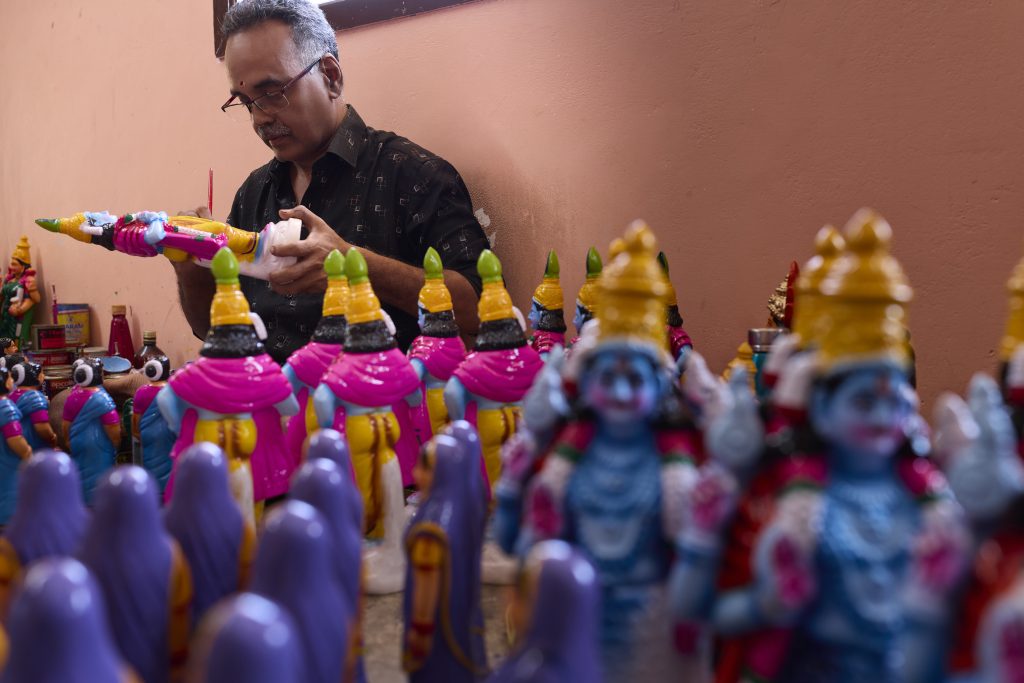
Doll making is a slow process. Completing a single doll from moulding to final painting can take one to one and a half months. Because of this, artisans typically work on multiple pieces throughout the year.
The production process is closely tied to seasonal conditions. Summer months are ideal for drying, as sunlight helps harden the material effectively. During the monsoon, when drying becomes difficult, artisans focus more on painting and finishing work. Activity increases as Ganesh Chaturthi approaches, continuing steadily until the Navaratri season.
The craft therefore follows the rhythm of nature as much as the rhythm of festivals.
Preserving a Living Tradition
For many households, Golu dolls are associated with festive decoration and celebration. For the families who make them, however, the dolls represent something much larger. They embody continuity, cultural memory, and the survival of traditional craftsmanship.
In a time when mass production and digital replication are increasingly common, handmade practices require time, patience, and dedication. Each doll carries the marks of human effort, from the shaping of the material to the careful application of colour.
The tradition of Golu dolls continues because artisans have sustained it across generations, ensuring that the stories, forms, and meanings embedded in these figures remain alive. Through their work, the festival of Navaratri continues to bring together devotion, art, and cultural heritage in homes across the region.