

In the Valley of Cardamom: Harvesting Cardamom in the Western Ghats
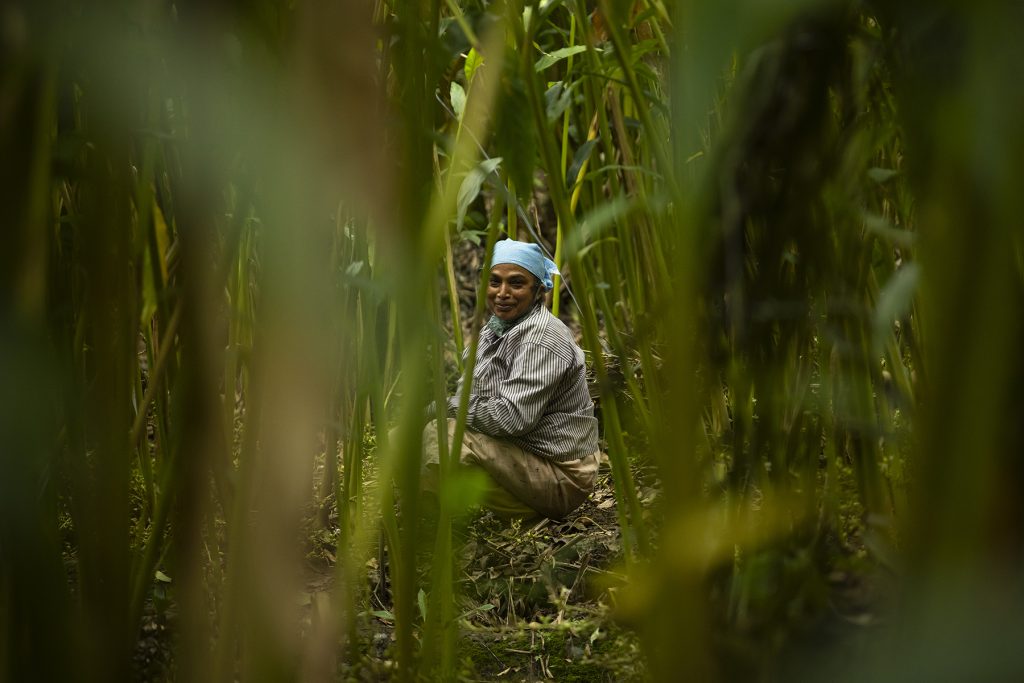
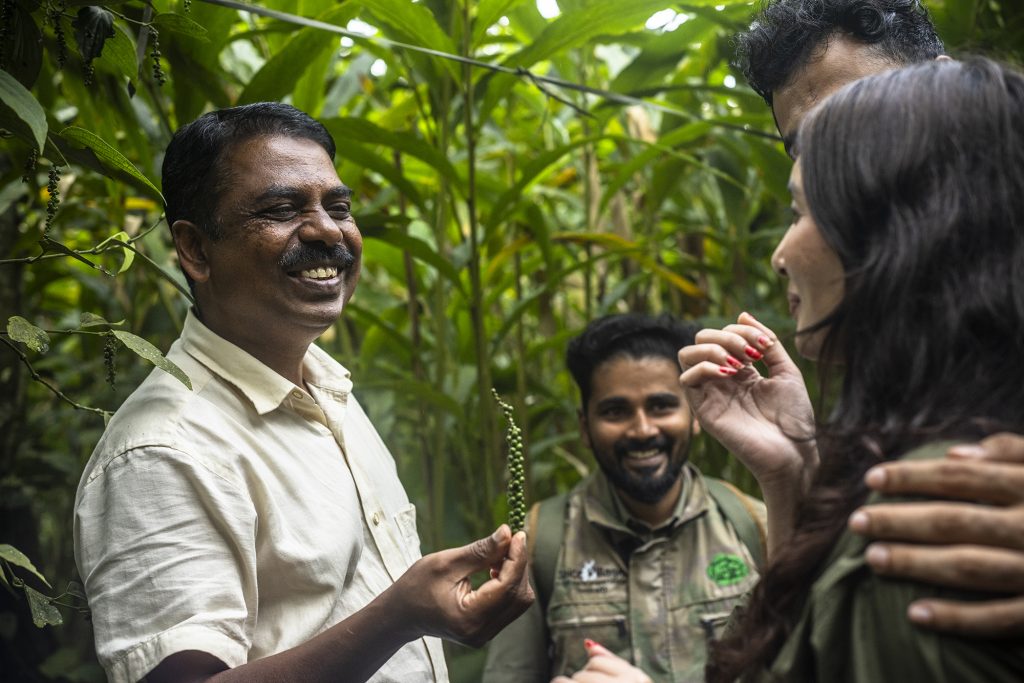
“My name is Sudhir. My farm’s name is Flavors Farm.”
With that simple introduction begins a story that stretches back 150 years, into the mist-laden folds of the Western Ghats, where cardamom breathes in filtered sunlight and pepper vines curl around living pillars of green.
Sudhir’s farm is not just a plantation. It is an inheritance of memory, and quiet devotion. His great-grandmother arrived here from Palakkadu nearly a century and a half ago, in search of work. She could not have known that her journey would seed a legacy, one that today produces some of the finest cardamom in the region.
A Valley Shaped by Climate and Care
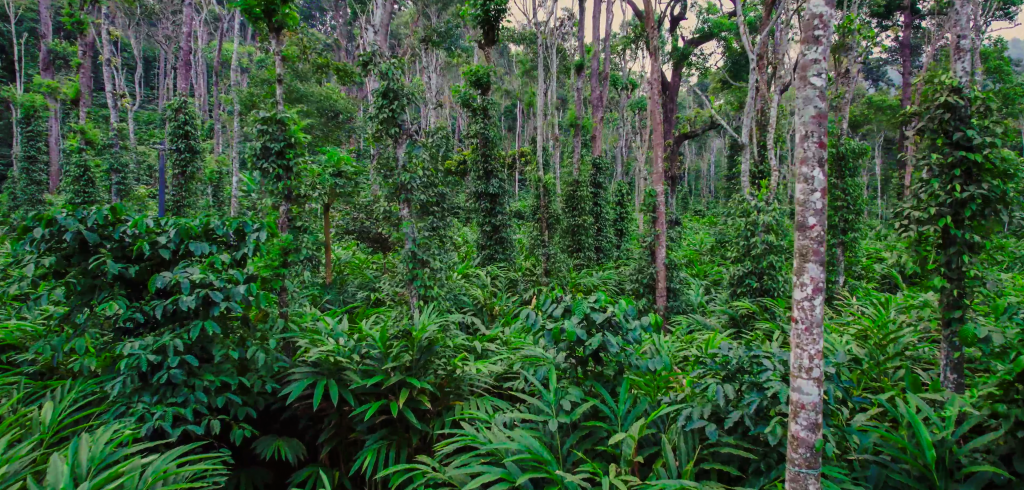
Cardamom is not an easy plant. It is sensitive. Temperamental. Demanding. “Like a child,” Sudhir says, “you have to look after the cardamom.”
The secret behind its exceptional quality lies in four climatic conditions. First, rainfall—between 1300 and 2500 millimeters annually. Then temperature—the plants are happiest below 32°C, but the ideal range rests between 16 to 23 or 26 degrees. Altitude matters too. Cardamom prefers elevations from 600 – 1200 meters; Flavors Farm sits comfortably at 800 meters above sea level.
But perhaps the most delicate balance lies in light. Cardamom needs sunlight—but not direct sunlight. It needs rain—but not too much. The plantation is shaded by alder trees, many 50 to 60 years old, creating a canopy that filters sunlight into a gentle glow. The result is an environment so perfectly tuned that this region has earned a quiet monopoly in cardamom production. A small nearby village is even known as “Cardamom Valley.”
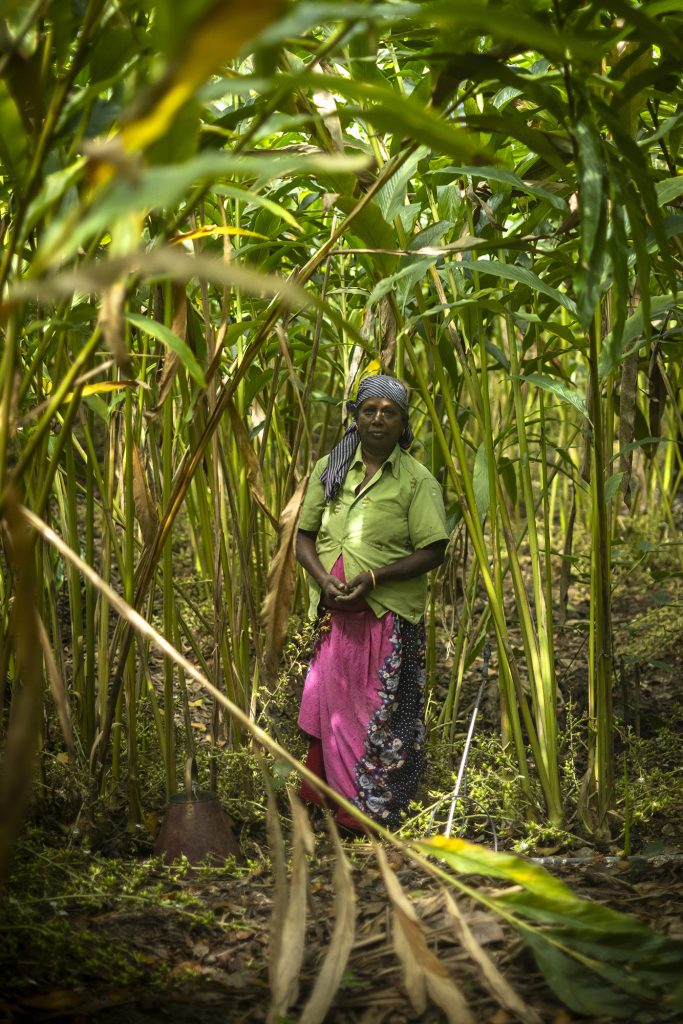
From a 5,000 square kilometer region, nearly 60,000 to 90,000 kilograms of cardamom are collected every seven days. Eighty percent of it remains in India. The rest travels outward, carrying the scent of these hills to distant kitchens.
Seven Harvests, Fourteen Years
One of cardamom’s great marvels is its rhythm. Every 40 to 45 days, harvest begins again. Seven harvests in a year. A single plant lives for about 14 years, with its first ten years yielding the most abundant crop.
Traditionally, seeds took two to three years before fruiting. But by selecting strong rhizomes from healthy mother plants, Sudhir can now harvest within 18 months. It is knowledge earned over decades—and passed down through generations.
Each capsule must be picked at precisely the right stage: yellowish-green, never fully green. The difference lies inside. Immature pods hold pale seeds. Properly ripened ones reveal rich black seeds—the true heart of flavor. These are dried gently in electric ovens for 16 to 18 hours at low heat. From six to eight kilograms of fresh cardamom, only one kilogram remains after drying.
Then comes grading. The most premium category is 8.5 mm in size. Out of 1000 kilograms, only 150 to 200 kilograms meet this “classic” grade. The rest falls into 8 mm and 7 mm categories, many destined for export.
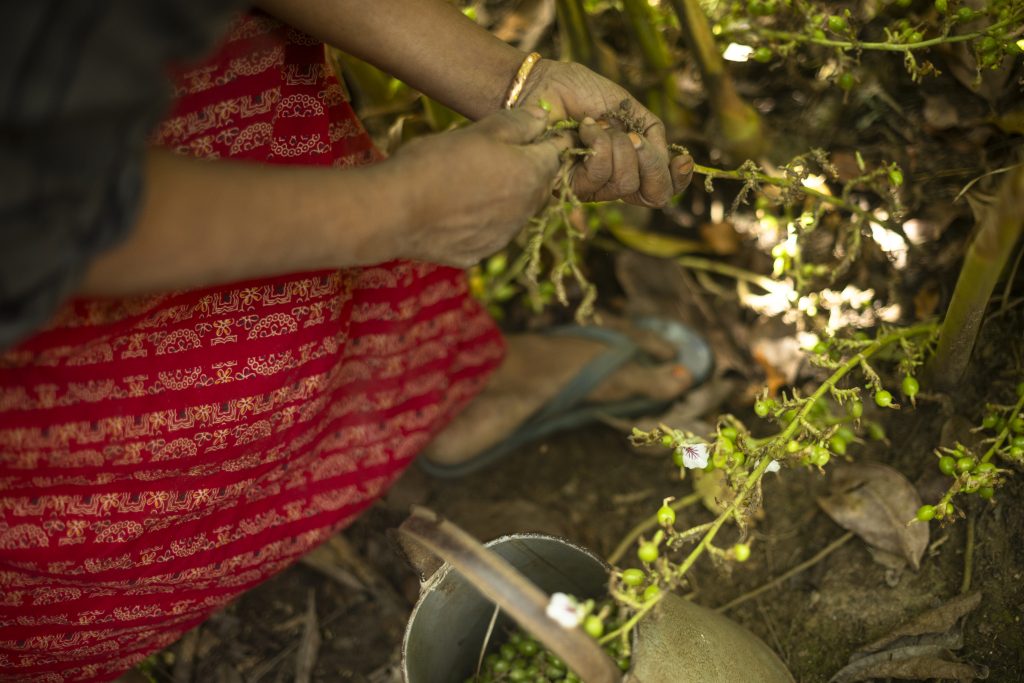
The oil content—9 to 10 percent—is what gives this cardamom its commanding aroma. Compared to competitors like Guatemala, whose oil content is lower, Kerala’s cardamom remains deeply prized.
Native Roots and Wandering Spices
Cardamom, black pepper, ginger, and turmeric are native to these Western Ghats. They have grown here for over 600 years, once wild and scattered, before becoming systematic plantations.
In the 1920s and 30s, a British tea planter named John Murphy walked through these forests. Fascinated by cardamom, he acquired 3,000 acres about 35 kilometers away and introduced systematic planting—five to six feet between each plant. Local farmers were skeptical. But within months, they saw improved yields and adopted his methods.
Other spices arrived from afar. Nutmeg and cloves from Indonesia’s Malacca Islands. Cinnamon from SriLanka. Allspice from Jamaica—earning the nickname “Jamaican pepper” for its blend of clove, cinnamon, and pepper aromas. Vanilla too found a home here.
Yet, cardamom remains the main crop. Eighty percent of farmers focus on it because of its multiple harvest cycles and income stability—despite the intense labor it demands.
The Orchid Flower and the Bees
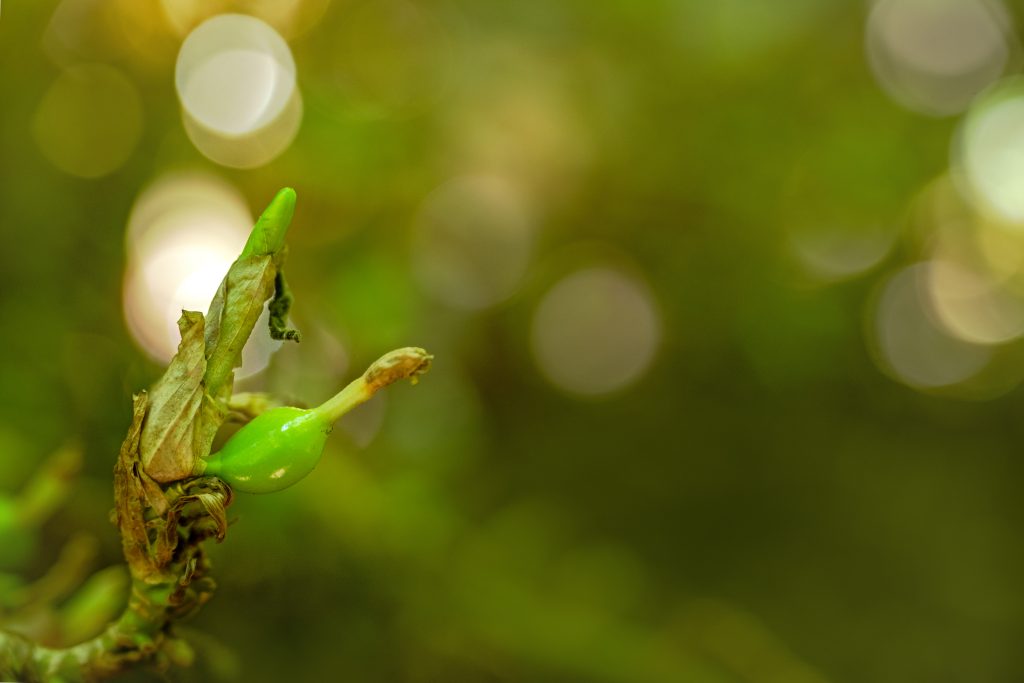
The cardamom flower looks like an orchid, delicate and improbable. But pollination is its greatest vulnerability. Honeybees from the nearby Periyar forest perform this essential service. Without them, there is no harvest.

Forty-five to fifty days after pollination, the capsules mature. Harvesting is done one pod at a time, selecting only those ready. It is meticulous work, but necessary for preserving quality.
Beyond flavor, cardamom carries medicinal value. It aids digestion, is a remedy to bronchial infections, and also supports in curing skin diseases. This is why it often finds its way into tea and into a local specialty: Attappallam spice coffee.
The recipe is simple. One kilogram of roasted coffee beans—preferably Robusta—blended with 50 grams each of fenugreek and cumin, and 60 grams of cardamom seeds. The fenugreek aids digestion. The cardamom elevates the aroma. It is coffee rooted in soil wisdom.
The King of Spice
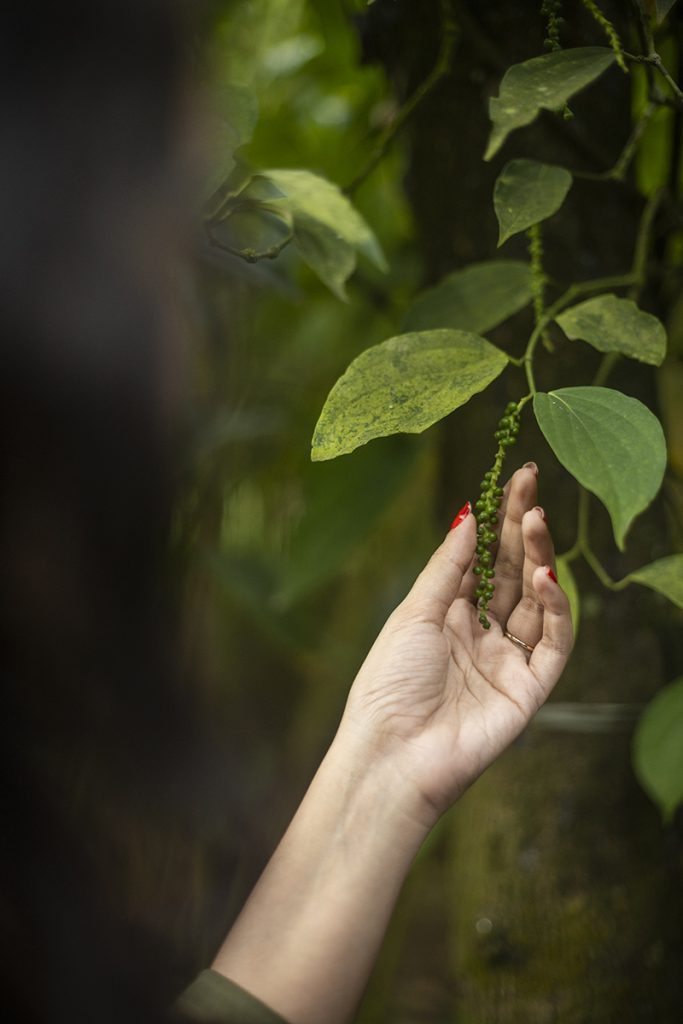
Pepper grows differently. It is a vine—a climber that needs a tree for support. From a single vine, three distinct spices emerge: green, black, and white pepper.
Green pepper is harvested tender in November and dehydrated. Black pepper requires patience until March. The berries are soaked in hot water, sun-dried for five days, and turn black. Four to five kilograms reduce to one kilogram after drying.
White pepper is harvested later, when the berries turn fruit-like. Soaked for 14 days with daily water changes, the outer layer is rubbed off by hand, revealing the inner seed—the “heart of the pepper.” It is spicier, more intense.
Kerala and Tamil Nadu together hold more than 24 traditional pepper varieties. Just 35 kilometers away grows Neelamundi—“blue berry” pepper—cultivated by tribal communities. Even if its cuttings are transplanted to Sudhir’s farm, the output changes. Soil, rainfall, altitude—all shape flavor.
Four hundred kilometers away lies Thalassery, home to one of the world’s most aromatic peppers. Again, transplant it elsewhere and it transforms. Spice, like wine, is bound to terroir.
Even harvest timing affects flavor. Early February yields milder black pepper. Mid-March produces strong heat. Late April gives fruitier, aromatic notes. For chefs, this is a universe of possibility.
A Grandmother’s Promise
Through it all, one presence anchors the farm, Sudhir’s grandmother. She was the first woman to introduce spices in the field here. Her message remains simple: grow spices organically. No artificial fertilizers. No pesticides.
For 30 years, Sudhir has honored her words.
Birds help control insects. Natural cycles sustain the soil. The spices serve local markets and some export demand. The farm provides employment to villagers and workers from other states.
“When I see this farm,” he says, “I still remember my grandma.”
There is pride—but also gratitude. If given another life, he says, he would like to be born here again.
And perhaps that is the truest measure of a farm—not the kilograms harvested every seven days, nor the premium 8.5 mm grades, nor even the oil content that captivates global buyers.
It is the joy of tending something alive. The happiness of growing honest spice. The quiet dignity of honoring a grandmother’s promise.
Have a spicy day.